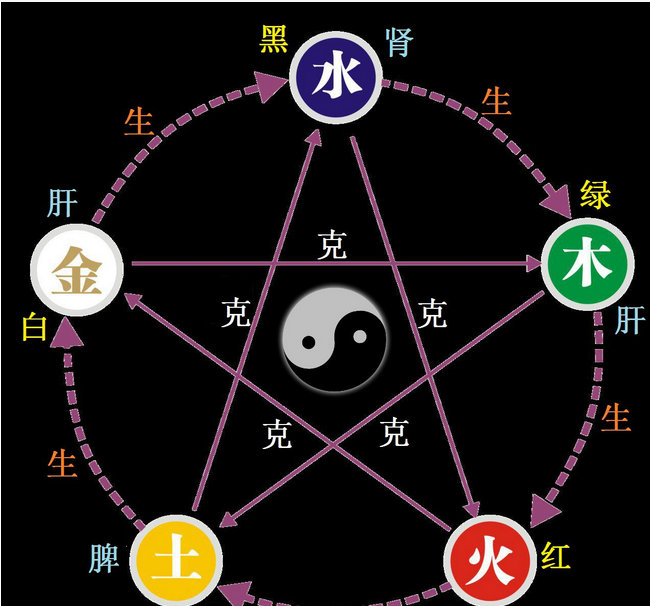
Five Elements Theory
Overview
The Five Elements Theory, also known as Wuxing in Chinese, is a fundamental concept in traditional Chinese philosophy and medicine. It describes the interdependence and interaction between five natural elements: Wood, Fire, Earth, Metal, and Water. The theory is deeply embedded in Chinese thought, influencing everything from medicine and astrology to music, martial arts, and military strategy. It is often used in conjunction with the Yin-Yang philosophy to describe the natural world and its phenomena.
Historical Background
The origins of the Five Elements Theory trace back to ancient Chinese texts, such as the Rites of Zhou, which is an early Chinese classic. The theory was developed during the Warring States Period (475-221 BC) and became a cornerstone of Chinese philosophy. It was used to explain various aspects of life and nature, including the human body's composition, the changes of seasons, and the dynamics of interpersonal relationships.
The Five Elements
-
Wood (Mù): Representing growth, vitality, and flexibility, Wood is associated with spring and the direction east. It is believed to influence the liver and gallbladder in the human body. Wood is considered a symbol of beginnings and creativity.
-
Fire (Huǒ): Symbolizing warmth, energy, and passion, Fire corresponds to summer and the direction south. It governs the heart and small intestine. Fire is seen as the element of transformation and dynamism.
-
Earth (Tǔ): Earth represents stability, nourishment, and balance. It is associated with late summer or the transition between seasons, as well as the center direction. Earth influences the spleen and stomach and is the grounding force among the elements.
-
Metal (Jīn): Denoting strength, persistence, and structure, Metal is linked to autumn and the direction west. It affects the lungs and large intestine. Metal is seen as the element of contraction and introspection.
-
Water (Shuǐ): Water symbolizes adaptability, wisdom, and fluidity. It is associated with winter and the north. It influences the kidneys and bladder. Water is considered the element of reflection and depth.
Interaction of the Elements
The Five Elements Theory outlines two primary cycles of interaction: the Generating (Shēng) cycle and the Controlling (Kè) cycle.
Generating Cycle (Shēng): This cycle describes how each element supports the growth of the next. Wood feeds Fire; Fire creates Earth (ash); Earth produces Metal (from ores); Metal enriches Water (through mineral content); Water nourishes Wood.
Controlling Cycle (Kè): This cycle describes how each element restricts or controls another to maintain balance. Wood controls Earth (through roots stabilizing soil); Earth controls Water (by damming); Water controls Fire (extinguishing flames); Fire controls Metal (melting); Metal controls Wood (cutting).
Application in Traditional Chinese Medicine
Wuxing plays a significant role in Traditional Chinese Medicine (TCM) by providing a framework for understanding the relationships and interactions in the human body and between the body and its environment. In TCM, the Five Elements—Wood, Fire, Earth, Metal, and Water—are used to categorize various aspects of health, including organs, tissues, senses, and emotions, and to understand their interdependence and balance.
Each element corresponds to specific organs in the body: Wood to the Liver and Gallbladder, Fire to the Heart and Small Intestine, Earth to the Spleen and Stomach, Metal to the Lungs and Large Intestine, and Water to the Kidneys and Bladder. This categorization extends to physiological processes, such as digestion and circulation, and to the emotional states associated with each organ, such as anger or joy, which can impact health.
Wuxing guides diagnostic and therapeutic practices in TCM. For instance, an imbalance in one element might manifest as physical symptoms or emotional disturbances related to that element's corresponding organs. Practitioners use this information to tailor treatments, which may include acupuncture, herbal medicine, dietary adjustments, and lifestyle changes, to restore balance among the elements and improve health.
The Five Elements theory also underpins the practice of Wu Qin Xi, or the Five-Animal Frolics, a qigong exercise developed by Hua Tuo in which each animal movement corresponds with an element and its related organs and functions. This practice promotes physical and mental health by enhancing organ function, improving circulation, and balancing the body's energies.
Influence on Culture and Arts
The Five Elements Theory extends beyond medicine into various cultural practices and arts. It influences Feng Shui (geomancy), where it is used to harmonize individuals with their environment. In martial arts, the theory is used to explain techniques and strategies. Additionally, the theory has a role in Chinese music, where scales and compositions are associated with different elements.
The Five Elements are a vital aspect of Chinese cultural identity, offering a framework for understanding the interconnectedness of all things. The theory's application across different fields exemplifies its versatility and enduring significance in Chinese life and thought. Photo Gallery(1 picture)CategoriesChinese PhilosophyTagYin and Yang and Five ElementsRelatedLum Medicinal Bathing of Sowa RigpaTraditional Chinese MedicineWuxingWu Xing ZhuangCatalogue1. Overview2. Historical Background3. The Five Elements4. Interaction of the Elements5. Application in Traditional Chinese Medicine6. Influence on Culture and Arts - - - []








